Bring Authentic Ancient Egypt to Your Designs
The allure of Ancient Egypt is timeless. Its iconic visual language—the poised profile figures, the intricate hieroglyphics, the powerful symbols like the Eye of Horus and the ankh—evokes a sense of mystery, power, and enduring beauty. For designers and creators, tapping into this aesthetic is more than just decoration; it's about connecting with a visual history that carries instant recognition and profound meaning. This is where having the right design assets becomes crucial, moving beyond generic motifs to elements rooted in authentic research.
A Curated Collection, Not Just a Font
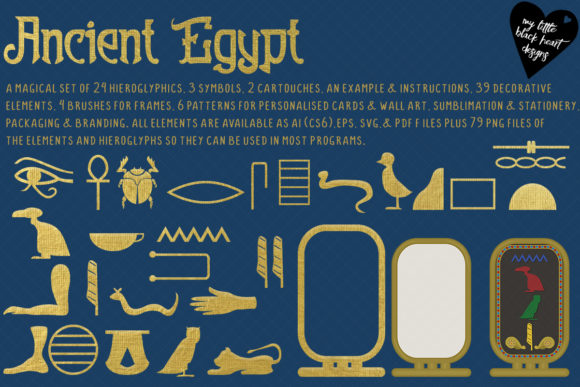
It's important to clarify that this isn't a traditional typeface where you type a word and it appears in hieroglyphics. Instead, think of it as a meticulously researched toolkit of premium font companions—individual vector illustrations and PNG elements. The collection is built from actual museum references, offering 24 distinct hieroglyphics, the three most recognizable symbols (Eye of Horus, ankh, scarab), decorative borders, patterns, and even cartouche templates. The value here lies in its authenticity and versatility. You're not guessing at symbols; you're using digital replicas of historical ones, which lends immediate credibility to your project.
This approach offers significant flexibility. Whether you're working in Adobe Illustrator with AI and EPS files, or using SVG for web or PDF for print, the vector formats ensure your Ancient Egyptian elements scale perfectly without losing clarity. The included PNG files, with transparent backgrounds, allow for quick integration into any software, from Photoshop to Canva. This makes it a practical set for both seasoned designers and those creating their own social media graphics or marketing materials.
Where This Egyptian Aesthetic Truly Shines
The applications for such a focused, high-quality set are incredibly broad. For brand identity and logo design, a single, well-chosen symbol like the ankh or a stylized cartouche can create a logo mark that is both unique and steeped in symbolic meaning. Imagine a boutique hotel, a jewelry brand, or a wellness studio using these elements to convey themes of eternity, protection, and wisdom.
In editorial design and packaging design, the decorative elements and patterns can be used as subtle borders, chapter headings, or background textures that add a layer of sophistication and narrative. A history book, a specialty tea brand, or a luxury cosmetic line could use these assets to create a cohesive, story-driven visual experience that feels curated and intentional.
For digital spaces, the impact is just as strong. Web design elements like section dividers or icon sets can be enhanced with these motifs. Social media graphics become more engaging and shareable when they feature a striking Eye of Horus or a pattern inspired by temple walls. The key is restraint—using one or two elements effectively often has more impact than overwhelming a design.
Practical Guidance for Seamless Integration
When incorporating a strong stylistic set like this, the most critical step is evaluating project fit. Ask yourself: does the personality of Ancient Egypt—authoritative, mystical, historical—align with my message? It's perfect for projects related to history, archaeology, luxury, spirituality, or education. It might be less suitable for a casual, minimalist tech startup unless used in a very abstract, symbolic way.
Font pairing is where a designer's skill truly comes into play. Since these are illustrative elements, they pair best with clean, modern serif fonts or sans serif fonts for body text. A classic serif like Garamond or a neutral sans-serif like Helvetica provides a calm, readable foundation that lets the Egyptian elements stand out without competing. Avoid pairing with overly decorative script fonts or handwritten fonts, as this can create visual chaos and diminish the hierarchy.
Always test readability and visual hierarchy. Use a hieroglyphic or symbol as a focal point, not as a replacement for legible text. The included cartouche instructions are a fantastic starting point for creating a custom monogram or logo mark. Experiment with the 4 brushes for frames to create borders for certificates or invitations. The 6+ patterns can be used as subtle textures on backgrounds or packaging materials.
Finally, for any commercial use, reviewing the licensing is a standard but essential practice. This set is designed for commercial font applications, giving you the freedom to use it in client work, products for sale, and branded materials. By treating these elements as part of your broader design assets library, you can consistently and professionally weave the powerful visual language of Ancient Egypt into a wide array of creative projects, ensuring your work is both beautiful and meaningful.